Fixed points
- Fixed number of bits to represent the integer and fractional parts
- With 64 bits: 32 bits for integral and fractional part (Q32.32)
- No Floating Point Unit (FPU) needed
16-bit fixed point example (Q8.8)


 Validating floating point
implementations
Pierre Ciadoux
NIST CAVP / PQC
MPTS 2026
01/27/2026
Validating floating point
implementations
Pierre Ciadoux
NIST CAVP / PQC
MPTS 2026
01/27/2026

 Content (12 min presentation)
Definition of floating points and fixed points
Inaccuracy and Variation examples
Real world impact
Content (12 min presentation)
Definition of floating points and fixed points
Inaccuracy and Variation examples
Real world impact
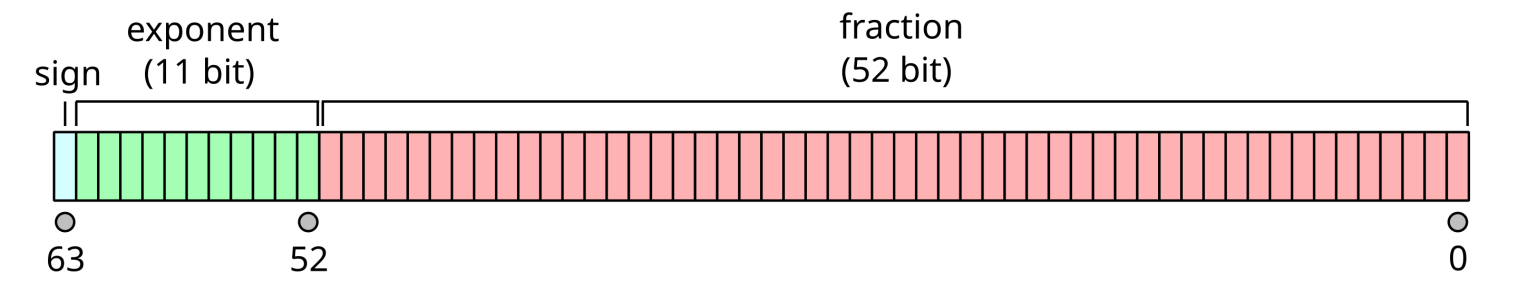 Floating points (as specified in IEEE754)
Most processors use floating points based on standard IEEE754
Useful for very large or very small numbers
Efficient using hardware computations (FPU)
By Codekaizen - Own work, CC BY-SA 4.0, https://commons.wikimedia.org/w/index.php?curid=3595583
Floating points (as specified in IEEE754)
Most processors use floating points based on standard IEEE754
Useful for very large or very small numbers
Efficient using hardware computations (FPU)
By Codekaizen - Own work, CC BY-SA 4.0, https://commons.wikimedia.org/w/index.php?curid=3595583
Fixed points
16-bit fixed point example (Q8.8)
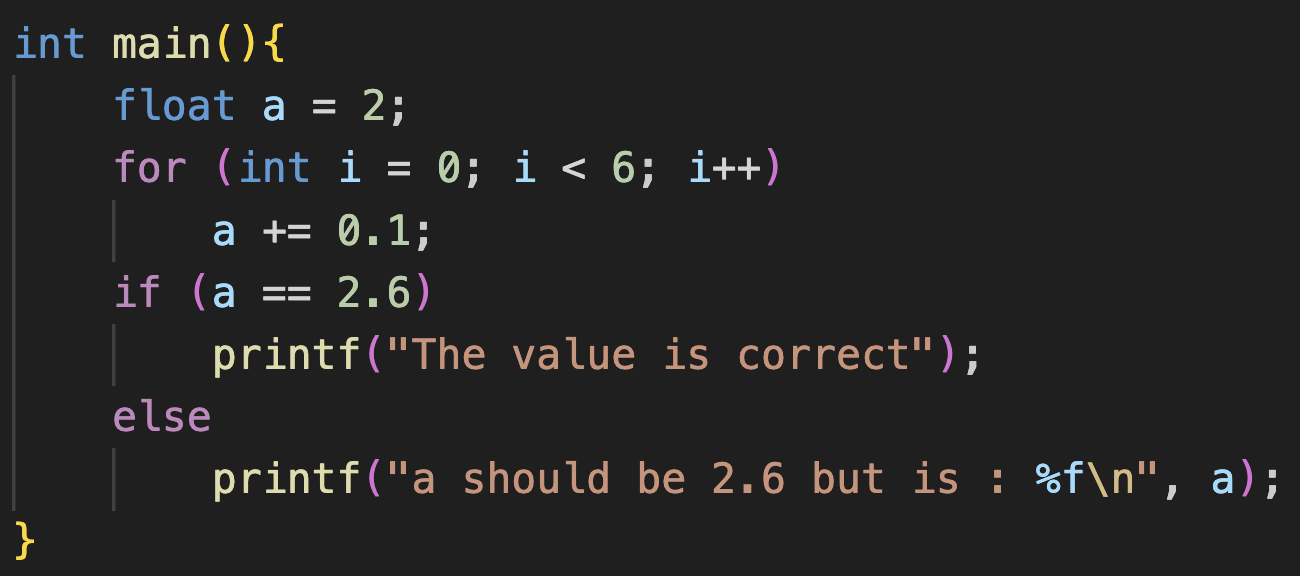 Inaccuracy
a should be 2.6 but is: 2.599999
GCC: warning: floating-point comparison is always false;
constant cannot be represented exactly in type'float' [-Wliteral-range]
Inaccuracy
Inaccuracy
a should be 2.6 but is: 2.599999
GCC: warning: floating-point comparison is always false;
constant cannot be represented exactly in type'float' [-Wliteral-range]
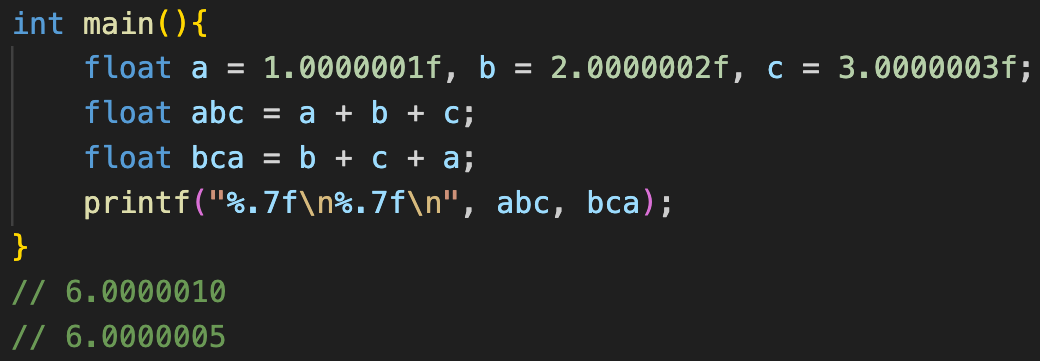 Variations
Implementation differences
Example: (a + b) + c ≠ a + (b + c)
Variations
Implementation differences
Example: (a + b) + c ≠ a + (b + c)
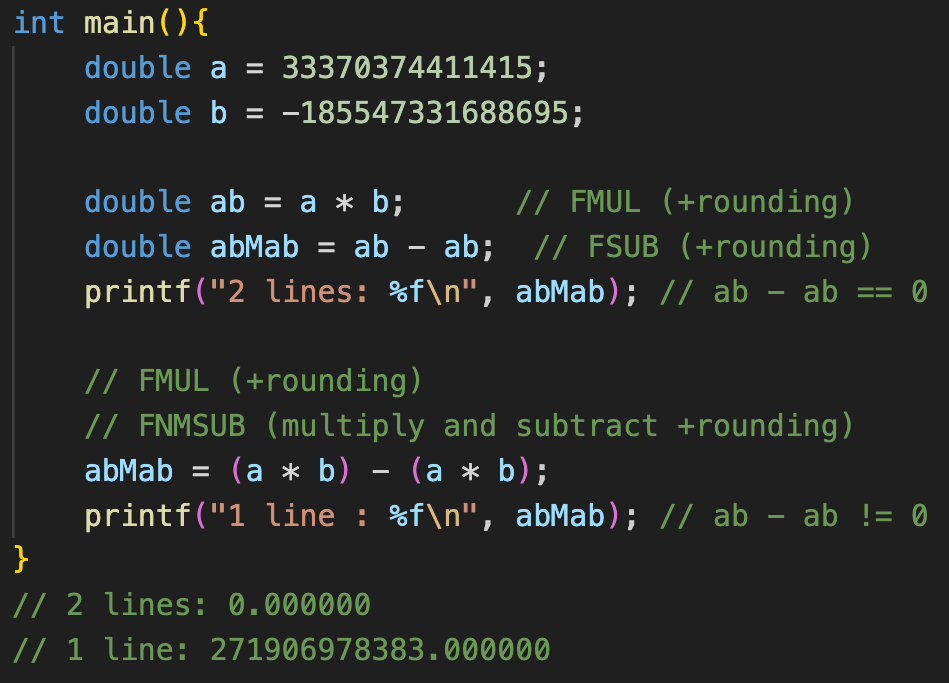 Variations
Compiler induced
Fused-instructions
Variations
Compiler induced
Fused-instructions
Real world impact
A variation can impact execution path and/or numerical values
| ComputeValue(5.48) | ComputeValue(5.51) | ComputeValue(5.53) |
|---|---|---|
| 5 | 6 | -1 (error) |
Validating different numerical values
Potential validation
Small
difference
Detectable
difference
Large
difference
Numerical
difference
Hidden
difference
Validating different execution path
Potential validation
Small
difference
Reasonable
way to
enumerate
branches
Large
difference
Different
execution path
Large number
of potential
branches
Conclusion
Validation can decide to allow for some variation in floating (and
fixed) point computations
Depends on the scheme used
Using floating points can impact values but will only have a real
impact on a small percentage of computations
It is likely that a validator computes the same values and doesn’t
notices variations
-> Need for more test vectors than deterministic
Questions?
Upcoming article on Validating Falcon with:
Maxime Bros
Chris Celi
Ray Perlner
Contact:
pierre.ciadoux@nist.gov
cavp@nist.gov